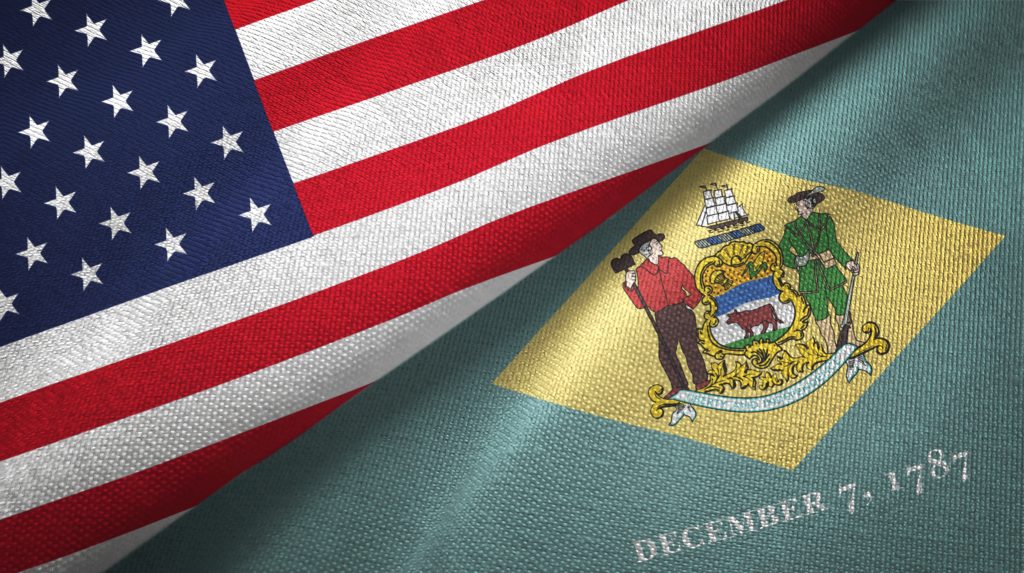
When company executives first start researching US expansion, they quickly discover that creating a Delaware C Corporation is one of the initial tasks. To learn more about the why and how of Delaware C Corporations, check out our previous blog post on that topic.
While creating a Delaware C Corporation is an important step in the overall US expansion process, there is a persistent misconception that simply creating a Delaware C Corporation will provide foreign companies with some type of advantage with US venture capital investors and/or US customers. Neither assumption is true.
Like most aspects of doing business in the US market, taking half steps or partial actions towards launching a US company will rarely produce successful business outcomes.
No Advantage with US Investors
US venture capital investors will only want to invest in your parent company. They will have no interest in investing directly in your US subsidiary since the overall enterprise value of your company (revenue, intellectual property, etc.) resides exclusively in the parent company.
Many US venture capital firms that invest in later-stage companies (A, B rounds, or beyond) are perfectly comfortable directly investing in UK Ltd, German GmbH, etc. foreign corporations. In fact, there are now over 60 US venture funds with an office in London looking for deal flow from the region.
Some early-stage US investors (pre-seed, seed, and sometimes A rounds) may not have experience investing outside of the US market and may be unwilling to invest in foreign corporations. These investors may ask foreign companies they invest in to do a corporate inversion or “Delaware Flip” where the US C Corporation becomes the corporate parent company and the UK Ltd or German GmbH becomes the subsidiary.
If you would like to learn more about “Delaware Flips,” here is a link to a comprehensive resource on that topic by Daniel Glazer with Wilson Sonsini.
There is almost never an advantage to spending time and money to do a corporate inversion or “Delaware Flip” proactively during the fundraising process. If requested as a condition of funding, ask that making your Delaware C Corporation the parent company be an additional term on the term sheet.
No Ability to Transact with US Customers
When foreign companies first start selling directly into the US market from their home country, they will find that some US buyers are comfortable contracting directly with a foreign company, but many will not. Ultimately, not having a fully functioning US C Corporation will create significant friction in the sales process. Once your buyer at a large US corporation has agreed to purchase your product, the typical next step in the process is navigating the procurement team and process. The standard list of requirements the procurement department typically requires for a new vendor includes an Employer Identification Number (EIN), US address, US contracts, US banking details, and US-specific insurance coverages.
Simply creating a Delaware C Corporation will not solve this challenge. Your company will still not meet the typical requirements that the procurement department requires for a new vendor.
A Fully Functioning US C Corporation
Creating a fully functioning US corporation that can do business with other US corporations includes the following steps beyond creating a Delaware C Corporation:
- Employer Identification Number
- US Office Address
- US Contracts and Agreements
- State Identification Numbers
- BE-13B Filing
- Beneficial Ownership Information Filing
- US Bank Account
- US Accounting System (US GAAP Financials)
- US Tax Returns (CPA Firm)
- Transfer Pricing Study
- Annual Report Filing
- Annual Franchise Tax
- Sales Tax Reporting
- Annual 1099 Processing
If you’re curious about the costs of setting up a fully functioning US C Corporation, check out this blog post on budgeting for US expansion.
Summary
Creating a Delaware C Corporation is often seen as a crucial step in US expansion for foreign tech companies. However, this alone does not provide advantages with US venture capital investors or customers. US investors will insist on investing in the parent company, and US customers require a fully functioning US corporation to transact smoothly. To successfully launch and scale in the US market, foreign companies must establish a comprehensive US presence, including obtaining an EIN, setting up a US office, and meeting various regulatory and financial requirements.
If your company is serious about succeeding in the US market, you should book a time to speak with our team. We are always happy to talk with ambitious Founders and executives determined to win US market share for their company and investors.