
As European founders increasingly look westward for growth capital, understanding the nuances of the American venture landscape has become critical to fundraising success. Having worked with dozens of UK and European startups making the US expansion journey, I’ve seen firsthand both the tremendous opportunities and the unexpected challenges of raising venture capital in the US.
The statistics tell a compelling story: US venture funds deploy roughly 3-4 times the capital of their European counterparts annually. For ambitious founders with global aspirations, tapping into this capital pool isn’t just advantageous—it’s often necessary. However, the transatlantic fundraising process involves much more than simply translating your pitch deck from pounds or euros to dollars.
The Critical Elements of US Fundraising Success
Through years of guiding European startups through successful US fundraising rounds, I’ve identified seven key areas where preparation makes the difference between success and failure:
- Understanding US VC Expectations & Market Norms
American VCs operate with different expectations and cultural norms than their European counterparts. US investors typically seek larger outcomes, faster growth trajectories, and more ambitious market approaches. While European investors might value capital efficiency and sustainable growth, US VCs often prefer to see aggressive scaling plans with corresponding capital requirements.
This extends to meeting dynamics as well. US pitch meetings tend to be more direct, with investors expecting founders to drive the conversation confidently. Be prepared to articulate a bold vision and defend your assumptions assertively. The classic European humility that might be appreciated at home can sometimes be misinterpreted as lack of conviction in the US context.
- US-Focused Pitch Deck & Market Sizing
Your European pitch deck likely won’t resonate with US investors without significant adaptation. American VCs expect to see comprehensive market analyses with clear TAM/SAM/SOM breakdowns specifically for the US market. They’ll want to understand your US competitive landscape in detail, including how you plan to compete with well-funded American alternatives.
You’ll need to emphasize your US focus and commitment to the market. This means highlighting any US traction, team members, advisors, or partners prominently. Your go-to-market strategy should demonstrate deep understanding of US customer acquisition channels and sales cycles. Remember that your market sizing should be ambitious but credible—US investors have seen countless pitches and can quickly spot inflated numbers.
- Consolidated Pro Forma Financial Model
US investors typically conduct more rigorous financial analysis than their European counterparts. They’ll expect a sophisticated financial model that demonstrates both deep understanding of unit economics and a clear path to scale.
Your model should include detailed monthly projections for at least 18-24 months, with quarterly breakdowns extending 3-5 years. Key metrics like customer acquisition cost (CAC), lifetime value (LTV), payback period, and burn rate should be prominently featured and defensible. Importantly, these metrics should be calculated according to US conventions, which sometimes differ from European standards.
Scenario analysis is also crucial—US investors will want to see how your company performs under various growth and funding environments. Be prepared to discuss your assumptions in detail and show how changes in key variables impact outcomes.
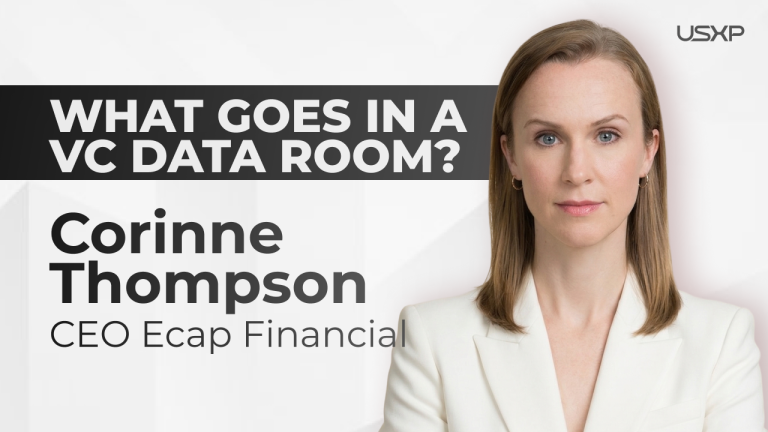
- Data Room Based on US-Style Due Diligence Request List
Once you’ve garnered interest, American investors will conduct thorough due diligence. Their requests and expectations differ somewhat from European practices, and being unprepared can significantly slow your fundraising momentum.
A proper US-oriented data room should include:
- Corporate documents organized according to US legal conventions
- Customer contracts with standardized terms recognizable to US investors
- Intellectual property documentation addressing US market protections
- Detailed cap table in US-standard format
- Employee agreements and equity plans aligned with US practices
- Comprehensive financial statements and accounting records
This preparation signals professionalism and reduces friction during the diligence process. It’s particularly important when dealing with US investors who may be taking additional perceived risk by investing in a foreign entity.
- US GTM Playbook and Year 1 Operating Model
American investors put enormous emphasis on go-to-market strategy, especially for European companies entering the US. They want to see a detailed playbook that demonstrates your understanding of US market dynamics.
This should include:
- Your initial target customer segments and geographical focus in the US
- Sales team structure and compensation plans
- Channel strategy and partnership approaches
- Marketing budget allocation across channels
- Customer success and retention strategies
- Top 100 prospect list
- Detailed year 1 expense and revenue forecasts
Your operating model should align with this GTM strategy, showing precisely how you’ll allocate capital to achieve specific growth targets. US investors typically want to see a clear connection between funding and acceleration of key metrics.
- US Investor Outreach and Introductions
The American VC ecosystem relies heavily on warm introductions and referrals. Cold outreach, while occasionally successful, is significantly less effective than in Europe. Building the right network for introductions becomes critical. If a management team doesn’t have the hustle to get an introduction to investors who are actively looking to meet companies, many US VCs will perceive that the team many not have the hustle to build a multi-billion dollar business.
Your outreach strategy should be highly targeted, focusing on investors with relevant sector experience and appropriate check sizes. Research each firm’s portfolio for complementary companies and potential conflicts. Leverage any US advisors, customers, or partners who can provide warm introductions.
Timing also matters—US fundraising processes often move faster once initiated but require more preparation beforehand. Start building relationships with potential investors well before your formal raise, ideally 6-9 months in advance.
- US-Style Term Sheet Negotiations Support
Deal terms in the US venture market often differ significantly from European standards. American term sheets typically include provisions that may be unfamiliar to European founders, such as:
- More complex liquidation preferences
- Participation rights and ratchet provisions
- Extensive protective provisions
- Different approaches to option pools and vesting
- Specific governance structures
Without expert guidance, these differences can lead to unfavorable terms or protracted negotiations. Having advisors who understand both ecosystems can help translate terms between contexts and identify potential sticking points before they derail your deal.
Making the Leap Successfully
The fundraising gap between Europe and the US represents both a challenge and an opportunity. European founders who successfully navigate the American venture landscape often secure larger rounds at better valuations, enabling more aggressive growth and market expansion.
However, this success requires purposeful preparation across all seven areas outlined above. The investment in getting these elements right pays dividends not just in successful fundraising, but in building the foundation for US market entry and growth.
For founders serious about raising American venture capital, the journey starts well before the first pitch meeting. Begin by assessing your readiness across these dimensions and developing a systematic plan to address any gaps. With proper preparation and guidance, the vast pools of US venture capital can become accessible even to companies based thousands of miles away.
If you’re considering raising venture capital in the US market and want to ensure you’re fully prepared, contact us today for a consultation. Our team and carefully vetted partner network specialize in helping UK and European founders successfully navigate the US fundraising landscape.