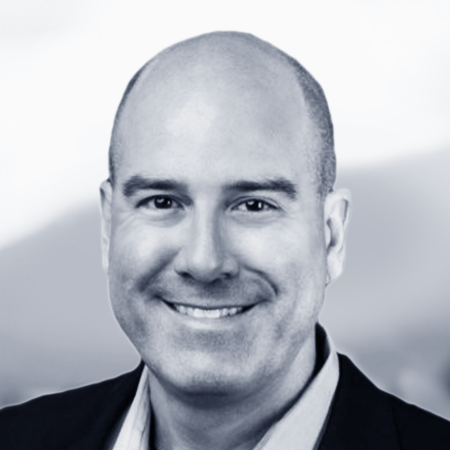
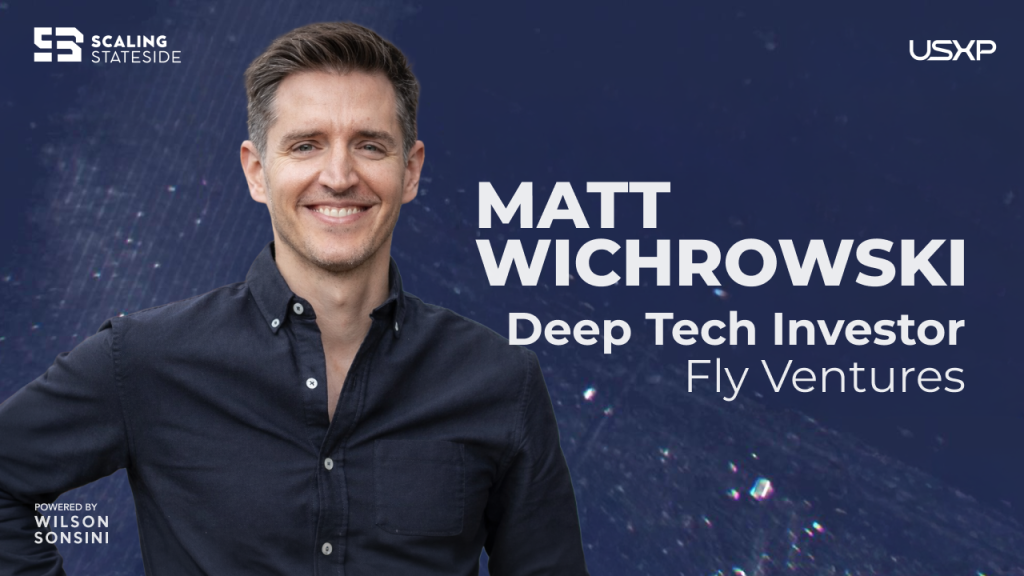
Most European founders I speak with are thinking about the US too late. That’s not a criticism — it’s a structural problem. The conventional wisdom for years was: prove the model at home, then cross the Atlantic. But on a recent episode of Scaling Stateside, Matt Wichrowski, a partner at Fly Ventures, made the case that this playbook is now outdated — and potentially damaging.
Fly Ventures is a London-based, first-check VC that backs what Matt describes as “technical founders that other funds are afraid to back.” Pre-seed, high tech risk, deep tech — founder-led from day zero. Matt splits his time between California and the UK, which gives him a rare view into both ecosystems. Here’s what he told us.
The Single Biggest Mistake European Founders Make: Going Too Late
I’ve heard versions of this from almost every US-based investor we’ve had on the show. But Matt framed it in a way that really stuck with me.
The market has changed. Companies are being formed faster, competition for venture funding and buyer attention is more intense, and growth trajectories for the best deals are compressing. The old staggered approach — dominate your home market, then expand — assumes a slower-moving world that no longer exists.
Matt’s view: in most cases, a founder needs to have a globalized mindset from day one. That doesn’t mean physically moving to the US at pre-seed. But it means thinking about the US as part of the core strategy from the outset — not as a Phase 2.
What Fly Ventures Actually Looks for: The “Animal Founder”
Every VC has a version of this concept, even if they don’t call it the same thing. At Fly, they use the term “animal founder” — and when I pushed Matt to quantify it, he was refreshingly honest: there’s no scorecard. It’s a gut feeling built over thousands of founder conversations.
What does it look like in practice? A few things:
- Speed and depth of thinking — how quickly and precisely they respond to hard questions
- Drive and hunger — not performative ambition, but something you feel when you’re in the room with them
- It doesn’t manifest the same way — some founders are intense and magnetic; others are calm but you can tell they’re processing at a different speed
Matt was clear that this quality matters more for US expansion specifically. Why? Because that kind of relentless, self-starting energy is simply more common in the US ecosystem. A founder who doesn’t have it will feel that delta the moment they land.
Understanding Investment Thesis — And Why Chasing the Wrong Fund Wastes Everyone’s Time
One thing we’ve seen repeatedly at USXP: founders burn months approaching VCs who would never invest in them, not because of the quality of the idea, but because of a fundamental mismatch in thesis.
Matt broke this down clearly. Fly Ventures is not a fintech fund, not an AI fund, not a crypto fund. They’re a pre-seed fund built to back ambitious, high-risk technical founders — specifically those who most funds would pass on because the technology risk is too high. Their most well-known investment is Wayve, the autonomous vehicle company, which they co-led at pre-seed in 2017 when autonomous vehicles were genuinely cutting edge.
They focus on developer tools, data stack, infrastructure, enterprise automation, industrial automation, and deep/frontier tech. They don’t do consumer. They don’t do marketplaces. And critically — if a founder has raised anything beyond a friends-and-family round, they’re likely too late for Fly.
The takeaway for founders: before you approach any VC, do 20 minutes of homework. Read their website. Check their portfolio. Understand their stage focus and sector focus. A warm intro to the wrong fund is still a dead end.
European vs. US Founders: The Real Pitching Gap
I asked Matt to compare pitching styles across the two ecosystems. His answer wasn’t what most people expect.
It’s not that European founders aren’t ambitious. It’s not that they can’t pitch. The gap, in his experience, is more specific: American founders are more comfortable selling the future when there’s nothing there yet. Not lying. Not embellishing. Just projecting forward with confidence and conviction, even when the product is early and the evidence is thin.
This is especially pronounced for engineers and scientists — which is most of the founders Fly backs. Technical founders often resist making claims they can’t fully substantiate. That instinct is admirable in a lab. In a pitch meeting, it reads as lack of conviction.
Matt made a point that my co-host Matt Oxley echoed from personal experience: American kids learn sales in kindergarten. Show and tell is, at its core, a persuasion exercise. That cultural conditioning runs deep, and European founders who don’t have it need to consciously develop it.
His coaching advice for reserved technical founders: it’s not about becoming someone you’re not. It’s about learning to separate what you know for certain from what you genuinely believe about the future — and then speaking to that second category with more confidence. Investors understand uncertainty. What they can’t work with is a founder who won’t commit to a vision.
Pre-Seed Valuation: What Deep Tech Founders Need to Know
We spent some time on valuation mechanics at pre-seed — particularly for deep tech, where there’s no revenue, often no product, and a 10-year time horizon.
Matt was direct: VCs at this stage are not valuing your company the way an investment bank would. There’s no DCF model, no comps. Instead, investors think in two inputs — how much capital do I typically deploy in an initial check, and what ownership percentage am I targeting? Valuation is the output of those two numbers, not the starting point.
For pre-seed, expect post-money valuations roughly in the $5M–$25M range as a general band (though there’s wide variation). On dilution, Matt suggested 10–20% is more typical than the 20–30% range some founders still assume. For competitive rounds, it’s tightening further.
The practical implication: if you’re a deep tech founder approaching pre-seed, don’t anchor on a specific post-money valuation as your opening position. Anchor on how much you need to reach the next meaningful milestone, and what equity you’re willing to give up. The valuation will follow from there.
The Founder Has to Lead the US Push — No Exceptions
On the practical question of US expansion structure, Matt’s position aligned exactly with what we’ve seen work at USXP: a founder has to lead it. Not a hired GM. Not a country manager. A founder.
He acknowledged the split-brain setup is common — often the CEO goes stateside while the CTO stays with the technical team. That can work. But someone with founder-level authority and product context has to be driving US market development. Especially in enterprise, especially at higher ACVs, only the founder can close the early customers and then translate those learnings back to the product team.
And when they do go, Matt was clear: treat the US like a foreign country, because it is one. Learn the cultural nuances. Invest in the social fabric. The US seems familiar — same language, same TV shows — but the business culture and social dynamics are genuinely different. Founders who underestimate that pay for it.
If You’re 12 Months Out from a US Move, Start Here
Matt’s practical checklist for founders preparing to expand stateside:
- Delaware flip — this takes time, especially depending on your home jurisdiction. Start early.
- Visa planning — the landscape is more complex than it used to be. Get immigration counsel involved before you need it.
- Network — do you have one in the US, or are you starting from zero? If zero, start building now. Warm intros move faster than cold outreach.
- Personal life — if you have a family, a partner, children, or a parent to think about, this isn’t a minor logistical detail. Plan it carefully. Founders who move without working through this first often hit friction they didn’t see coming.
The Bottom Line
Matt’s perspective is useful precisely because it comes from someone who has invested in European deep tech founders, watched them navigate the US, and seen firsthand what separates the ones who make it from the ones who struggle.
The pattern he sees in the founders who succeed: they move faster than feels comfortable, they lead the US effort themselves, and they learn to sell a vision before the evidence fully supports it. That last one is probably the hardest for European technical founders — but it’s also the most learnable.
You can connect with Matt on LinkedIn. He also publishes a newsletter called Reshare, worth following if deep tech and frontier investing is your world.