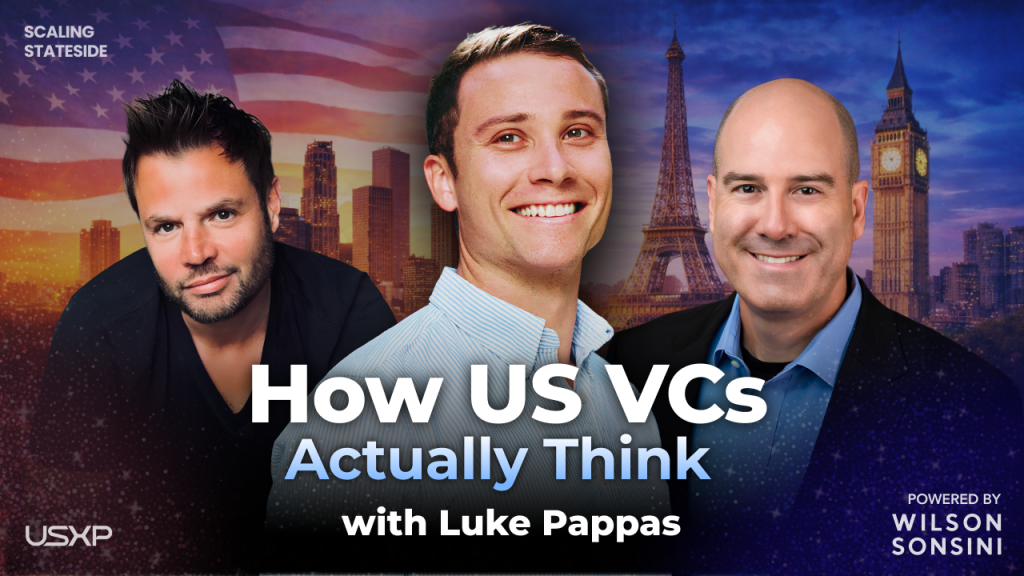
For European tech founders, Silicon Valley’s call can feel irresistible. But what if moving to the US too early is actually the wrong move?
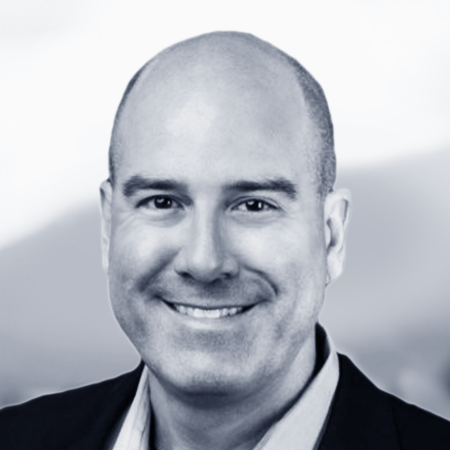
In Episode 7 of Scaling Stateside, Luke Pappas—Partner at NEA and architect of their London office—offers a contrarian take on US expansion timing. After 30 years in the Bay Area before relocating to London, Luke brings a unique dual perspective on both markets.
The Silicon Valley Trap for Seed Stage Founders
“People hear about and feel the allure of Silicon Valley,” Luke explains. “Let’s say you’re a seed stage founder from Stockholm and you move your company to San Francisco. That might be the right decision if you have a network there—the ability to meet investors, customers, and recruit engineers.”
But here’s the critical insight: “If you don’t have a network at all in San Francisco or Silicon Valley, just moving there won’t help you. You’re going to have to build a network from scratch. You’re going to have to meet net new customers from scratch.”
This cuts against conventional wisdom that says get to Silicon Valley immediately. Instead, Luke advocates focusing on your existing competitive advantages.
Your Network Is Your Unfair Advantage
Luke’s advice centers on a powerful principle: leverage what you already have before chasing what you don’t.
“If you grew up in Stockholm, some of your friends are now heads of product or engineering at other companies. They can be your first customers. People you knew in your first job can be your first hires.”
This network—relationships you’ve spent years building in your home market—represents an unfair advantage that disappears when you relocate to a city where you know no one. Your university classmates in leadership positions, former colleagues who can become early employees, local investors who understand your market—these assets take years to build and can’t be replicated overnight.
The Right Time: Series B Is the Inflection Point
So when should European founders expand to the US? Series B is the critical moment.
“When it comes time to Series B, that’s when you have to show you have the ability to be truly global. Let’s land some of those logos in the US and more broadly across the world.”
By Series B, you should have:
- Proven product-market fit in your home market
- Built a foundational team and customer base
- Demonstrated traction that translates across geographies
- Resources to invest in building a new market
This is when a venture partner like NEA becomes invaluable. “Think of us as a co-founder,” Luke explains. “We can introduce you to net new investors and help you hire that head of sales who’s going to open your New York or San Francisco office.”
Why Europe’s Moment Is Now
Luke compares today’s European tech ecosystem to the US market circa 2010—when entrepreneurship went from niche to mainstream.
Cultural Advantage: Team-First Mentality “In Europe there’s a freshness where it’s like ‘we want to be the first company in this city or category and put our country on the map.’ That permeates across everyone joining these companies.”
Compare this to Silicon Valley, where Luke observes cultural dilution: “There are stories of engineers working three or four different companies simultaneously.”
Role Model Effect Companies like Spotify, Adyen, and UiPath have created a demonstration effect. “Those early companies showed what’s possible and unlocked the talent layer in Europe to say, yes, we will join a seed stage or Series A company.”
Pitching Differences: Going Big vs. Going Tactical
Luke identifies a key cultural difference in how founders pitch investors.
US founders pitch bold, expansive visions—thinking big from day one. European founders take a more tactical, methodical approach, emphasizing execution and realistic milestones.
Neither is inherently better, but understanding this matters when pitching US investors who expect aggressive growth projections.
What NEA Looks for in European Founders
NEA opened their London office three years ago and now has 20+ European portfolio companies. Here’s what they prioritize:
- Founder Profile Above All “We put a lot of weight into the founder profile—who we are investing in, their motivations, the mission. At the seed stage, it’s really the majority of what you’re investing in.”
- Usage Over Revenue “What I think is actually a better indicator is usage. How many people are using the product? Is that usage increasing every day? If you see usage, you can eventually figure out how to monetize it.”
- Market Size and Differentiation The opportunity must support billion-dollar outcomes and either create a new category or meaningfully displace existing spend.
It’s Never Too Early to Reach Out
Luke challenges the misconception that founders need to be “ready” before approaching top VCs.
“Sometimes people worry: Am I ready to talk to a firm like NEA? It’s never too early. We love meeting companies when you have an idea, maybe you haven’t even left your current role yet.”
Building relationships early allows founders to get feedback, understand what investors look for, and create a track record of progress. “We might meet a company at seed or Series A and then lead the Series B,” Luke notes.
Your US Expansion Roadmap
Based on Luke’s insights, here’s when to focus on what:
Seed Stage:
- ✅ Build in your home market where you have network advantages
- ✅ Start relationships with US investors early
- ✅ Focus on usage and product-market fit
- ❌ Don’t relocate unless you have an established US network
Series A:
- ✅ Deepen traction in strongest markets
- ✅ Add US customers if they come inbound
- ✅ Build relationships with investors who have US networks
Series B:
- ✅ Demonstrate global capability with US logos
- ✅ Open US office with local hires
- ✅ Leverage investor networks for key introductions
The Bottom Line
Don’t abandon your competitive advantages chasing perceived advantages you don’t yet have.
Silicon Valley will always be there. The question isn’t whether to expand to the US—it’s when, and from what position of strength.
For European founders, that often means staying home longer than conventional wisdom suggests, building unassailable traction where you have natural advantages, then expanding from strength rather than desperation.
As Luke puts it: “You can build a company and have it be in Europe for the longevity of the company’s life and be globally successful. What matters is focusing on your competitive advantage.”
Watch the Full Episode
Hear Luke’s complete insights on European tech, venture capital fundraising, and US expansion strategy in the full episode of Scaling Stateside.
About Scaling Stateside
Scaling Stateside is a podcast by US Expansion Partners (USXP) that helps UK and EU startup founders understand the US expansion journey. Hosted by David Rose and Matt Oxley, each episode features successful founders and investors who share tactical insights about transatlantic business development, fundraising, and scaling internationally.
Powered by Wilson Sonsini