Most first-time founders treat the term sheet as the finish line. You get the offer, you sign, the champagne comes out — and then everyone quietly drifts back to their day jobs. I’ve watched it happen more than once, and I’ve done it myself. Here’s the truth I wish someone had handed me earlier: the term sheet is the starting line. What happens next — due diligence — is where the round is actually won.
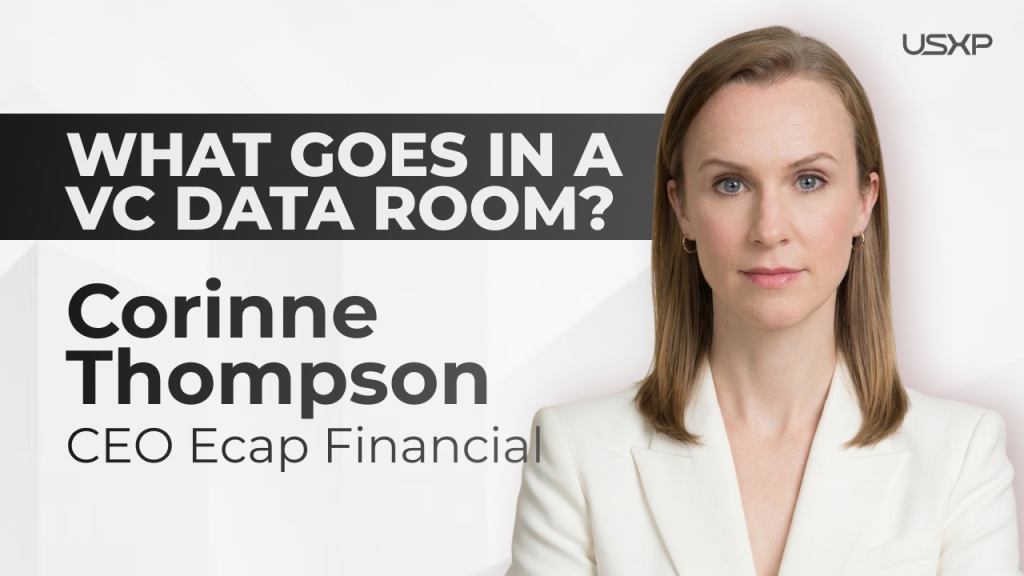
To get into the parts of fundraising nobody puts on a pitch deck, I sat down with Corinne Thompson, founder of eCap Financial. Corinne works both sides of this table: her firm runs financial due diligence for around 20 UK and European investors, and she also builds the data rooms, models, and collateral that companies use to raise. That dual view — investor and founder — makes her about as close to a subject-matter expert on this as you’ll find. Here’s what stood out.
There are two data rooms, not one
One of the most useful reframes from our conversation is that you should be running two data rooms, not one.
Data Room One is what gets you to a term sheet. Corinne fills it with the story: sales and go-to-market, marketing, awards and PR, the cap table, C-suite bios, the org chart, and the articles of association for your topco. What it deliberately does not contain is your customer contracts, employee agreements, or share option plans. That material is your crown jewels, and there’s no reason to hand it over before anyone has committed to your round.
Data Room Two opens once the term sheet is signed. This is the full picture — everything in the business — and it feeds financial, legal, tax, commercial, and technical diligence. The distinction matters even more with US investors, who typically won’t sign an NDA, and where even a signed NDA carries limited practical weight. Keeping your most sensitive material out of reach until there’s a real commitment protects you from anyone treating your data room as a research library for a competing portfolio company.
Diligence is really a test of one thing: are your numbers true?
Strip away the jargon and financial due diligence asks a simple question: can everything you’ve claimed be tied back to a contract, an invoice, and a bank statement? Corinne’s closest scrutiny almost always lands on the top line.
A few patterns come up again and again. Revenue described as ARR that turns out to be one-off professional services fees. A “three-year contract paid annually” that, once you open it, is a monthly rolling agreement with break clauses throughout. A customer cube whose MRR doesn’t reconcile to the revenue line in Xero. In one memorable case, a company had folded VAT into its customer cube — and therefore its revenue — inflating the top line by around 20%.
None of this is about catching founders out. It’s about the story matching the numbers. When you sell a compelling narrative, investors expect to see that same narrative in the data. The founders who sail through are the ones whose growth story and financial records tell exactly the same tale — much of which comes down to a well-built financial model, something we covered in depth in the USXP resource library.
▶ Watch the full conversation with Corinne below:
The folder structure that earns trust on sight
When a diligence provider opens your data room, the organization sets the tone before they read a single number. Corinne was candid that a clean, clearly labeled room lowers the mental load — and a chaotic one quietly makes the reviewer’s job harder from the first click. Her recommended top-level structure is refreshingly simple: Financials, Legal, Sales, Marketing, Tech, and Company Overview.
A few things she’d have you do inside those folders:
- Anonymize your customer cube and pipeline. Rename accounts customer one, two, three, and give 24 months of MRR so investors can build their own NRR and GRR waterfalls.
- Bundle your cap table. Roll twenty angels into a single line rather than handing over a sprawling shareholder list.
- Weight your pipeline honestly, and make sure it reconciles to your financial model rather than contradicting it.
- Include a map. The reviewers who love you are the ones handed an index pointing to exactly where each requested document lives.
I also asked Corinne about our world — founders expanding into the US. Her advice: make US spend a clear line item in your financial model, and label your group structure cleanly so a US topco and its subsidiaries are obvious at a glance. A reviewer who can see your US plan without hunting for it is a reviewer who trusts your operation.
Deals rarely die — they get renegotiated
Here’s the reassuring part, and it surprised me. Across more than 50 financial diligence processes, Corinne has seen only a handful actually collapse. Far more often, a surprise reshapes the deal rather than ending it. Overstated revenue becomes a revised valuation. Higher-than-expected burn becomes a tranched investment tied to milestones. (Speaking from experience: tranched deals are tough to live with, so it’s worth avoiding the surprises that create them in the first place.)
Her guidance when something thorny surfaces is the part every founder should internalize: don’t panic, and don’t hide it. Honesty and transparency win — partly because you’ll be signing reps and warranties anyway, and partly because a lot of the things you assume are deal-breakers simply aren’t. When that VAT issue came up, Corinne expected the investor to walk. They didn’t. The parties went to the board, reset the number, and moved forward. Walking away from a signed term sheet is costly for a VC too, and it leaves a mark in the founder community — so most would rather find a workaround with you.
Protect your time and your team
A term sheet usually comes with a clock — often around 60 days. The most avoidable way to lose momentum is to become the bottleneck yourself. Corinne has a live deal dragging right now for exactly this reason: not enough people assigned to answer diligence requests. The longer it drags, the more interest cools. If you’re close to a check, do everything in your power to get it signed quickly.
A structure that works: keep the CEO–VC relationship at the top, so you stay in the negotiating seat and out of the weeds. Let your CFO own financial diligence, your CTO own technical diligence, and your lawyers stay looped in. Then run short daily “war room” standups — 15 minutes to check where each workstream stands. That way you walk into the conversations that matter with a clear head, rather than getting flustered by a $20K discrepancy from two years ago that a reviewer just flagged.
One more line item worth watching: legal fees. They’re frequently uncapped, and they get cross-charged back to you at close — you’ll pay your own counsel and the investor’s, out of the money you just raised. Cap them early.
Start 90 days before you think you need to
If you’re a quarter away from a real process, start now. Pull together the information-request templates (plenty circulate) and begin collating everything into your two rooms. Corinne’s sharpest tip: the hardest requests often aren’t the data-room documents at all — they’re the mid-process questions where investors slice your data in new ways. Usage data and how you drive touchpoints. Quota attainment across your sales team. The things that don’t live neatly in a spreadsheet.
Above all, know where your soft spots are before an investor finds them, and have your answer ready. Every business has a few. Preparation is what turns them from a scramble into a footnote.
The bottom line
The founders who close cleanly aren’t the ones with flawless businesses — they’re the ones who treat diligence as a discipline, not an afterthought. Build the two data rooms early, keep your story and your numbers in lockstep, and protect your time once the clock starts.
If you’re preparing to raise in the US and want more on getting investor-ready, explore the USXP resource library. And to reach Corinne, you’ll find her and eCap Financial on LinkedIn.